
Paper, filled in by the wrong hands.
The DRC produces over 70% of the world's cobalt, much of it dug by hand in a sector that sustains an estimated 10 million people. Banking access among artisanal miners sits at 1 to 3%, and informal lenders fill the gap on predatory terms.
The blockage isn't the miner, it's the paperwork. Banks need identity, source of funds and due diligence, and no shared registry holds that record, so it ran on paper filled in by a bank agent on the operator's behalf. The person answering was never the person who knew, and the easiest decision was always no.
Change who holds the pen.
KOTA moves the starting point: the operator registers themselves and submits digitally, in their own words. The bank receives a structured application instead of a stack of handwritten cards, and the operator gets a score that shows the path forward. The record belongs to the person it describes.
One engine serves two institutions, a commercial bank and a government-mandated commodity aggregator, wearing different vocabulary for the same record. Those product decisions belong to the team; my work happened one level down: a form people can actually use, and a score they can stand behind.
Who It Is For
Two users, and what each one is blocked by.
A cooperative needs an account and has no record that proves it exists. A reviewer needs to decide and has nothing solid to decide on. Everything below starts from those two positions.
The Product
What the screens do with it.
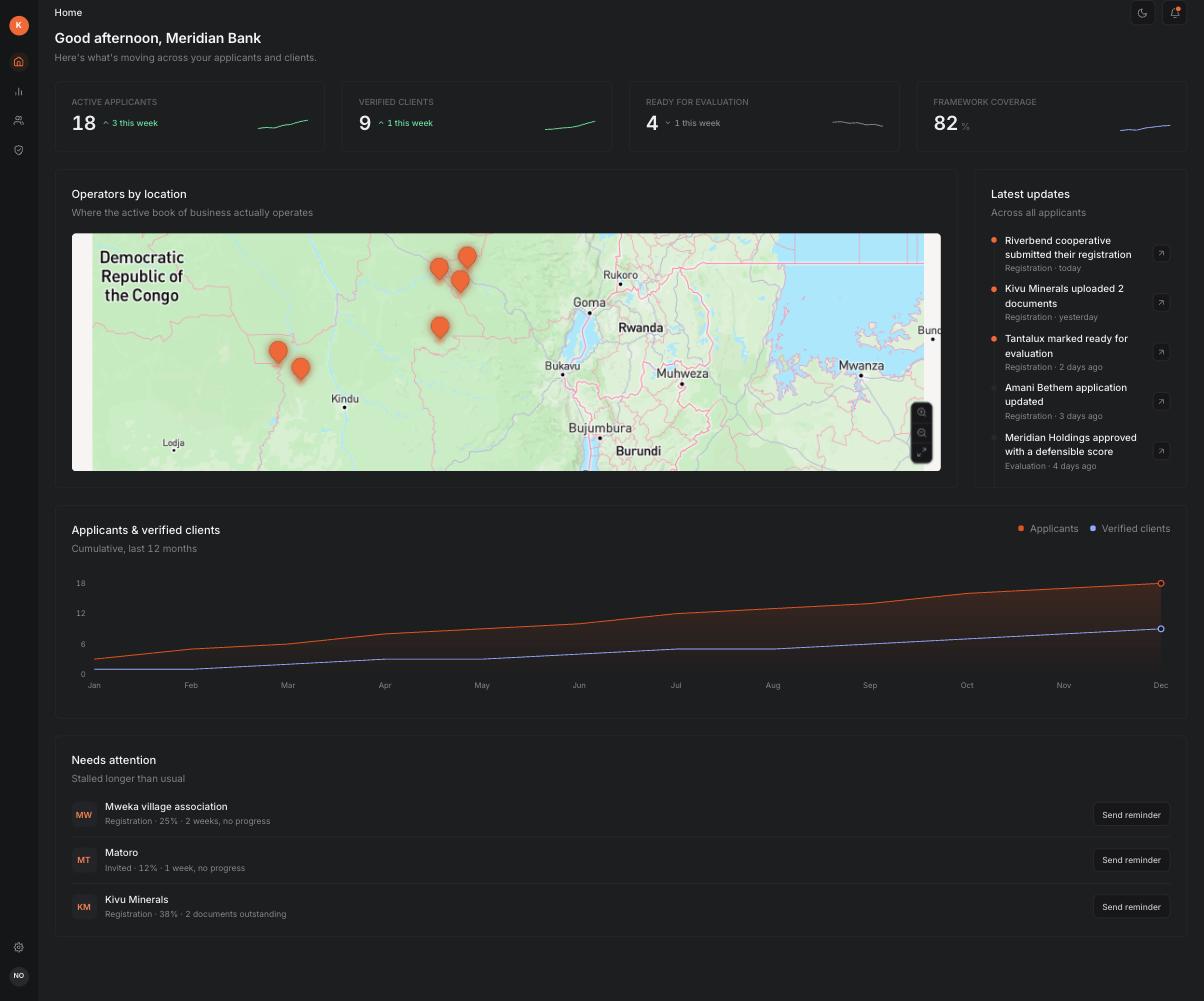
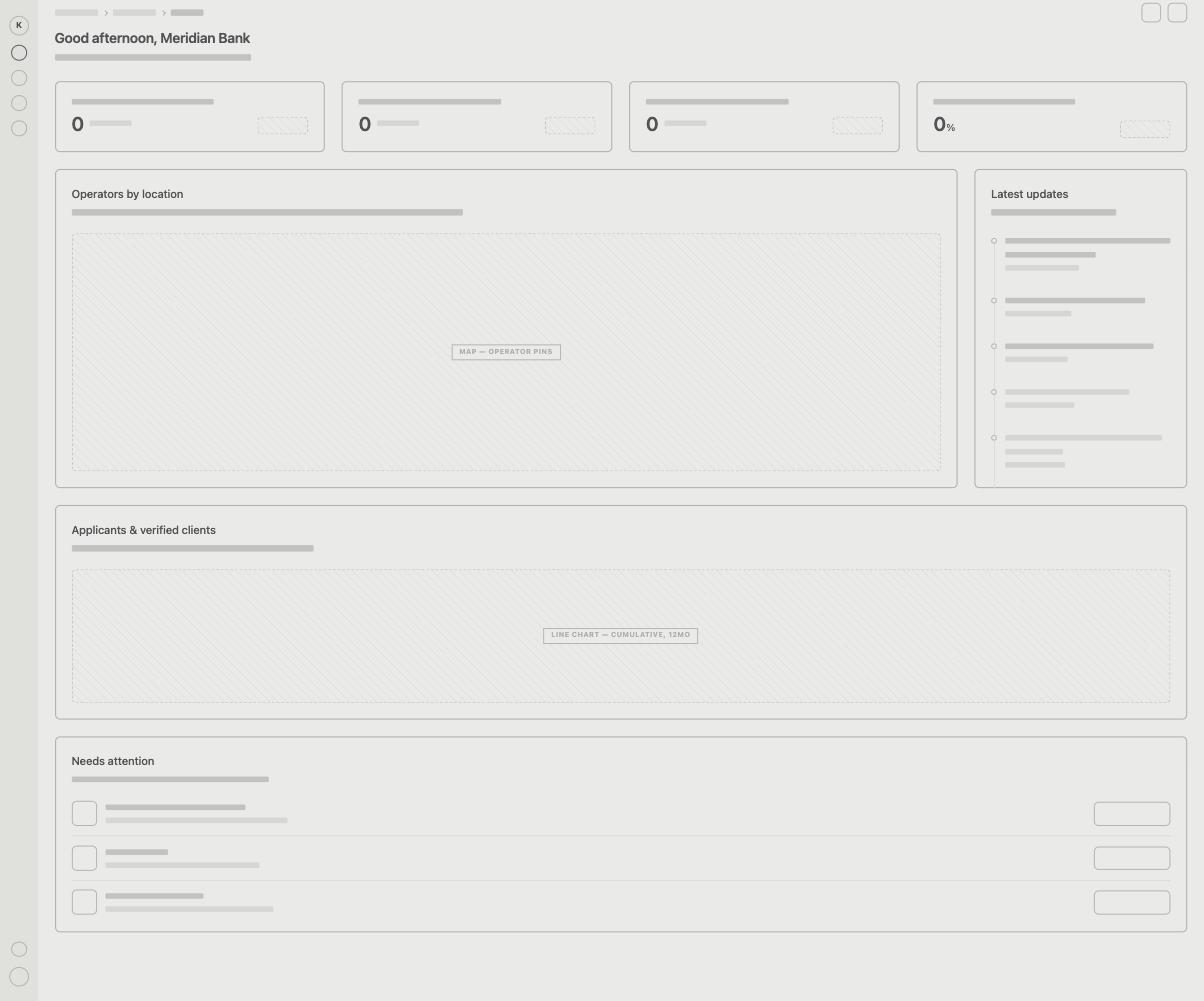
One record, filled once by the operator and read by every bank they apply to. Below: the file a reviewer opens, and the same bank screen at wireframe stage and at handover.
The Prototype, Live
Be the bank, or be the operator.
One record, two seats. As the bank you get the book of business on a map, the evaluation list, and an operator's file to approve, question or decline. As the operator you get that same file from the other end: the score the banks compute, the questions a reviewer left, and the form where they get answered. Throw the switch to change sides, here or from the mark at the foot of the sidebar.